
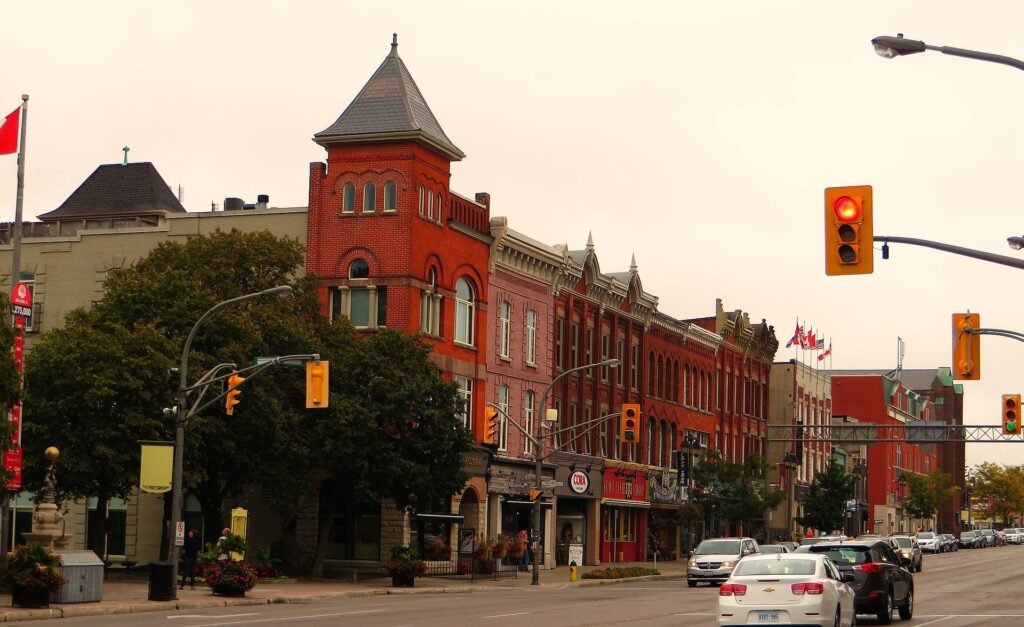
Hey folks, I’m a woodworker through and through. I’ve spent more years than I care to count with sawdust in my beard, running my hands over boards, and listening to what the wood wants to become. There’s something special about working in Stratford, Ontario. This town didn’t just happen to have a few cabinet shops — it was once one of the biggest furniture-making capitals in Canada.
When I walk these streets or drive past the old factory buildings, I feel a real connection. This is hallowed ground for anyone who loves turning trees into furniture that lasts generations.
How It All Started
The story begins back in 1867 with the Inman Brothers. While the rest of Canada was just getting going after Confederation, these guys were already building cabinets right here in Stratford. That same year, Abraham & Hepburn (later Campbell & Abraham) opened one of the first proper furniture factories employing more than a handful of hands.
By the 1880s, things really took off. Joseph Orr built the first modern furniture factory in 1884, right beside his father’s lumber yard. That was smart — having the wood right there means you can pick the best boards before they even leave the yard. I still do the same thing today.
Then came the big players. George McLagan built a massive operation after his first factory burned down in 1900. The man knew his stuff — he even designed a lot of the furniture himself. Other names that still echo around town: Imperial Rattan, Stratford Chair Company, Moore-Bell, Farquharson-Gifford, and later Kroehler.
At its peak in the 1920s, Stratford was producing nearly one-sixth of all the furniture made in Canada. Think about that for a second. One out of every six chairs, tables, dressers, and beds in this country came from right here. Over 1,300 skilled workers were making a living shaping wood in this town. That’s a serious legacy.
What Made Stratford So Good at It
A few things came together perfectly:
- Railways: Stratford was a major rail hub. You could ship furniture in six different directions. That meant we weren’t just selling locally — our pieces were going all over Canada and into the United States.
- Skilled Hands: Many of the workers were immigrants or sons of immigrants who brought old-world craftsmanship with them. The knowledge passed from master to apprentice, just like it should.
- Good Timber: Ontario’s forests were generous. Straight-grained pine, strong maple, beautiful walnut, and oak — all within reach.
I can’t help but smile when I think about those old-timers. They didn’t have fancy CNC machines or dust collection systems that could suck the air out of the room. They worked with hand tools, basic machinery, and an eye for detail that still influences how I build today.
The Spirit Still Lives On
The big factories eventually slowed down. Times changed, competition grew, and manufacturing moved. But the soul of that industry never left Stratford.
When I’m in the shop planing a board or cutting dovetails, I feel like I’m carrying on something important. That same attention to grain, to strong joinery, and to building pieces that will outlive us — that’s the real inheritance from those old Stratford factories.
Today, a new generation of woodworkers and artisans is keeping that fire alive. Small shops, custom builders, and passionate makers are scattered throughout the city and surrounding Perth County. We might not be shipping trainloads of furniture anymore, but we’re still doing what Stratford has always done best: turning good wood into something honest and beautiful.
At our workshop here in Stratford, we’re proud to be part of that long line of makers. Every time we build a dining table, a custom headboard, or a bookshelf, we’re adding our own chapter to this town’s story.
If you’ve got a piece of old Stratford furniture in your home, I’d love to hear about it. Many of those old dressers and sideboards are still going strong after 80 or 100 years — that’s the kind of work we aim to do today.
Because at the end of the day, good woodworking isn’t about trends. It’s about respect for the material, pride in your hands, and knowing you’re part of something bigger than one shop.
— Written from the bench by Scott Fritz
Have you inherited a piece of local furniture? Drop a comment below or stop by the shop. We’d be happy to talk wood, history, and what we can build for you.